


How Chromosome Structure Influences Cellular Processes
Our cells can pack nearly ~2 meters of DNA into a ~10μm nucleus, while still being able to accurately read, replicate, and segregate this tightly condensed genome. How is that entire genomic DNA organized in a tiny nucleus? How does the nucleus maintain this vast amount of information throughout life and how is it connected to human aging and diseases?
We aim to decipher the molecular mechanisms that allow cells to organize and maintain their genome throughout life. We pursue to deepen our understanding by using approaches that integrate single-molecule biophysics, cell imaging and computational analysis, nano/micro engineering, and molecular biology.
Principle of 3D Genome Structure
How the genome organizers regulate 3D genome folding?
How the DNA is organized in cells has something to do with the function of genomes such as transcription and DNA repair. The formation of a DNA loop between a specific gene locus and its regulatory element turn on the gene activity. Failure in maintaining a healthy genome structure has a great correlation with cancer predisposition and the aging process. We study the molecular mechanism regulating 3D genome organization.


Who organizes our genome in the nucleus?
The cohesin complex mediates the formation of chromosome loops and domains in cells. This epigenetically regulates gene expression and other DNA-based cellular processes. In addition, histone codes, chromatin remodelers, and self-assembling proteins contribute to the dynamic adaptation of the nuclear organization.
AI-Designed Genome Editor
To control the genome function by AI-driven de novo proteins
Epigenome editing refers to modifying DNA or histone marks without altering the underlying nucleotide sequence, providing a promising strategy to regulate gene expression without inducing genomic breaks. To develop next-generation epi-editors, we apply AI-driven protein structure prediction and design to build a programmable epi-editor library, ultimately enabling targeted gene regulation and therapeutic applications.

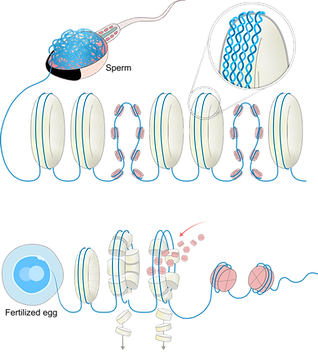
Genome in Sperm to Fertilization
How our genome carry epigenetic information during sperm formation and fertilization?
During sperm formation, the genome is tightly repackaged with protamines, yet key epigenetic marks are selectively preserved instead of being erased. These retained marks act like molecular “bookmarks,” guiding early gene expression after fertilization. Our research examines how protamine variants and chromatin architecture influence which epigenetic signals survive this transition. Ultimately, we aim to understand how these inherited cues shape the earliest steps of embryonic development.
Genome Maintenance in Microbial Diversity
How do bacteria survive in adverse environments?
Bacteria endure heat, toxins, and DNA-damaging stress by constantly reshaping and repairing their genomes. They use diverse strategies—protective DNA-binding proteins, rapid repair pathways, and dynamic chromatin-like structures—to keep their genetic material safe. Our research investigates how these mechanisms differ across species and how each strategy evolved to match its ecological niche. Through this, we uncover the molecular tricks that allow microbes to thrive in environments where most organisms would fail.
